Starting hydroponics at home is one of the most reliable ways to grow fresh lettuce, herbs, and leafy greens year-round—without soil, without a backyard, and often with less water than traditional gardening. Whether you live in a condo, apartment, or house, the process comes down to a few repeatable steps: evaluate your space, choose the right system, dial in water and nutrients, and build a simple weekly routine.
This guide walks you through exactly how to start a home hydroponic system as a beginner, with practical advice you can apply before you buy equipment or plant your first seedling.
What is hydroponics—and why grow at home?
Hydroponics is a method of growing plants in water enriched with nutrients, instead of soil. Roots receive oxygen, minerals, and moisture directly—so growth is often faster and more predictable than in pots or garden beds.
Home hydroponics works especially well when you want:
- Fresh harvests close to the kitchen — pick greens minutes before a meal
- Predictable results in small spaces — balconies, countertops, and utility corners
- Less mess and fewer pests — no soil spills or digging
- Year-round growing — supplement natural light or use grow lights indoors
If you are still comparing formats, our beginner hydroponics guide covers the same fundamentals in a shorter overview.
Step 1: Assess your space before you buy
Before choosing a home hydroponic system, measure the real working area—not just the footprint of the unit. You need room to refill water, check plants, and harvest without blocking a walkway.
Questions to answer first
- Where will it live? Kitchen counter, balcony, laundry nook, or living area?
- How much light is available? A sunny window may be enough for herbs; low-light rooms need a grow lamp.
- How much time can you spend each week? Most beginner systems need 15–30 minutes of checks, top-offs, and harvesting.
- Is there a water source nearby? Shorter refill paths make maintenance sustainable.
Condos and balconies often favor vertical systems that grow upward. Kitchens and shelves often suit NFT (Nutrient Film Technique) channels that spread horizontally.
Step 2: Choose the right home hydroponic system
There is no single best system for every home. The right choice depends on space, crop goals, and how hands-on you want to be.
Vertical tower systems
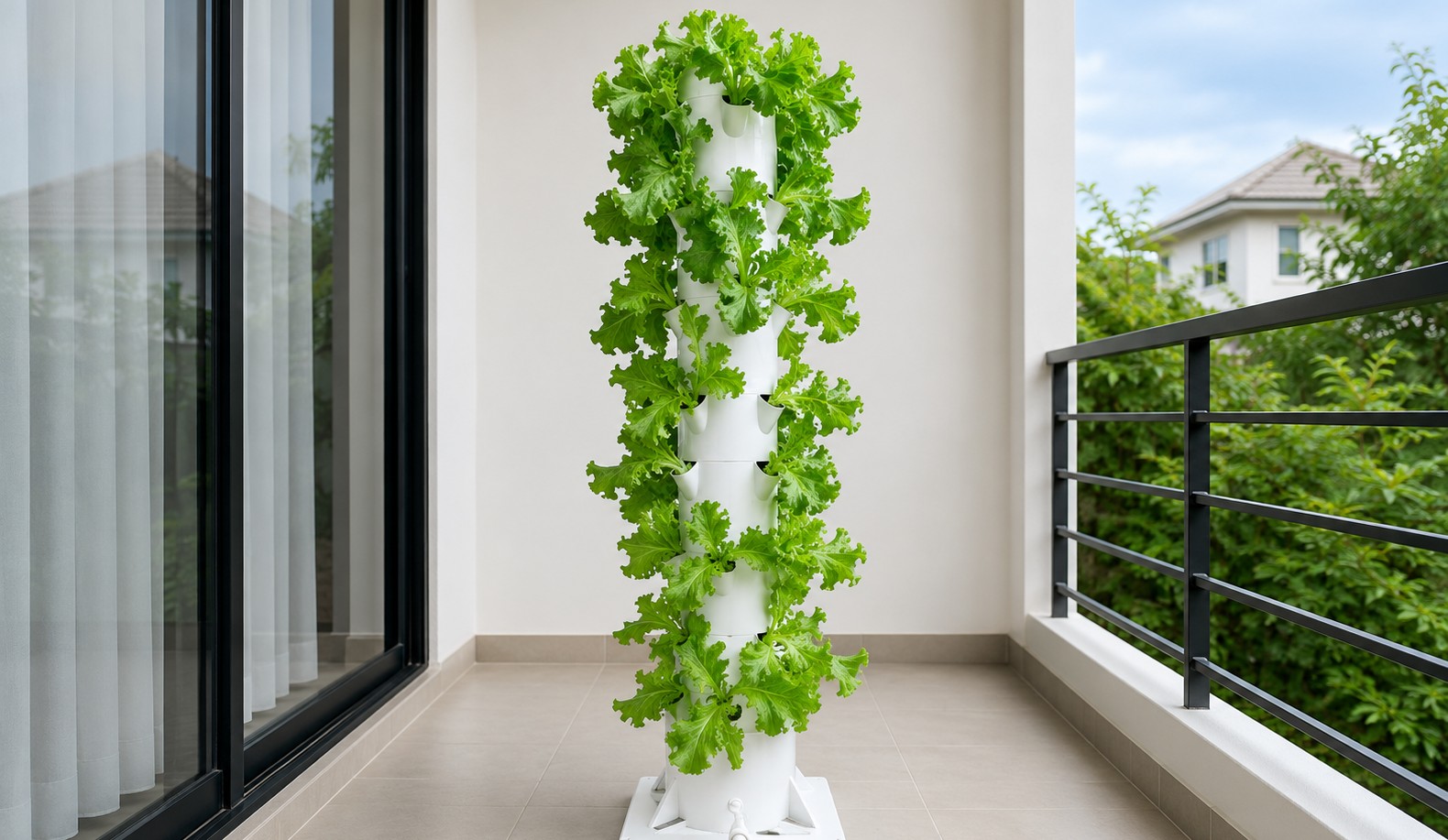
Towers stack plants in columns, maximizing yield per square foot. They are a strong fit for balconies and corners where floor space is tight but ceiling height is available. Learn more in our NFT vs tower comparison.
NFT and countertop kits
NFT systems circulate a thin film of nutrient solution across roots in channels. They integrate cleanly into kitchens and on shelving—ideal if you want a tidy, furniture-like setup.
DWC (Deep Water Culture)
DWC suspends roots in oxygenated nutrient water. It is simple to understand and popular for learning the basics before upgrading to larger systems. See DWC system options if you want a straightforward starting point.
Not sure which format fits? Browse beginner-friendly hydroponic kits matched to common home layouts.
Step 3: Gather essential equipment
Most home hydroponic setups share the same core components. Confirm these are included—or add them before day one:
- Grow structure — tower, channels, or buckets with net pots
- Reservoir and pump — holds and circulates nutrient solution
- Growing medium — rockwool, clay pebbles, or coco plugs to support seedlings
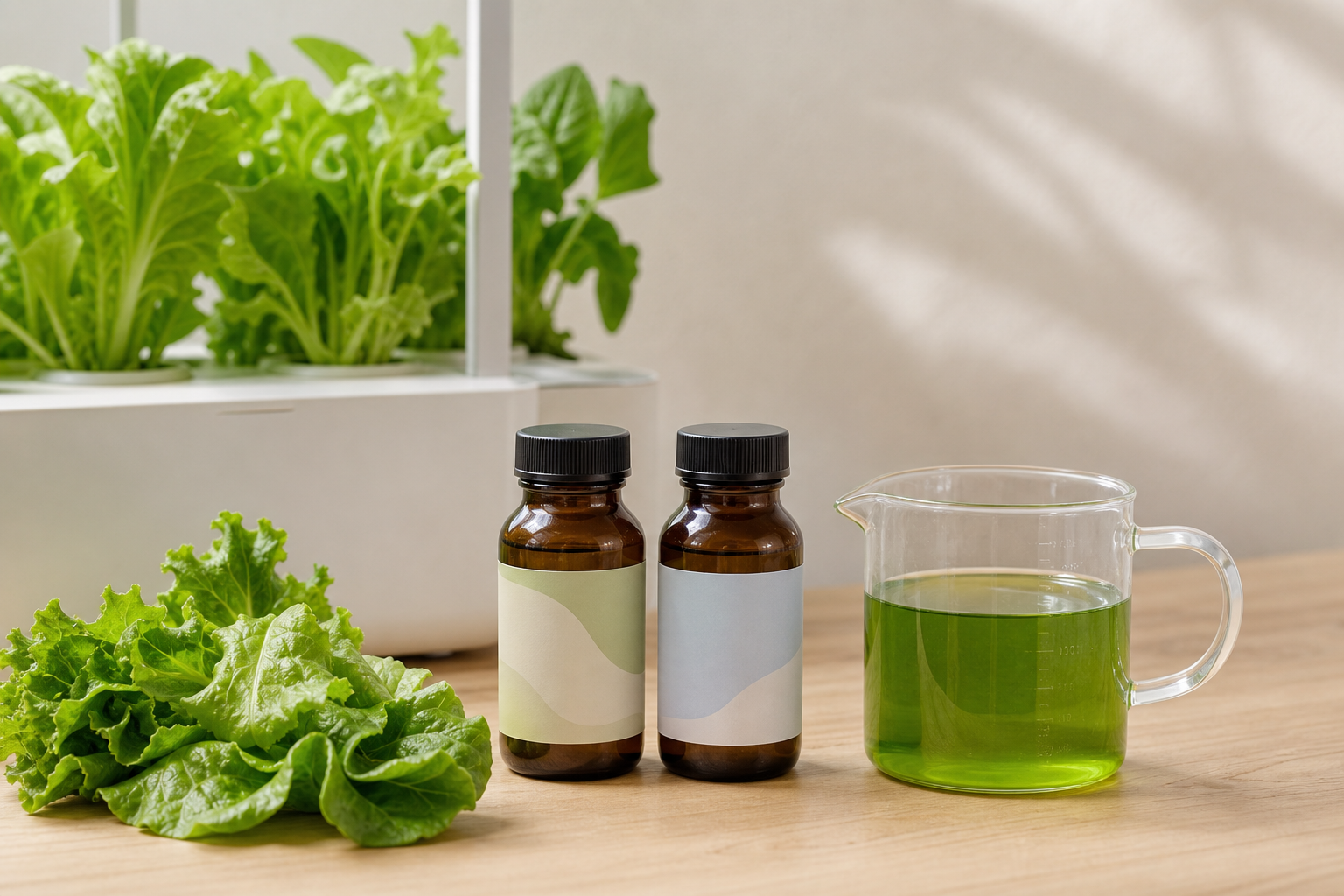
- Nutrients — a balanced hydroponic A/B formula or single-part blend for leafy greens
- pH and EC meters — essential for stable growth (see our nutrient balancing guide)
- Lighting — full-spectrum LED grow lights if natural light is under 6 hours daily
- Seeds or seedlings — start with fast crops like lettuce, basil, or kale
Prioritize food-safe materials, stable pumps, and reservoirs you can open and clean easily. Cheap plastics and inaccessible tanks create problems within the first few grow cycles.
Step 4: Set up your system
- Position the unit — level surface, near power and water, away from splash-prone electronics.
- Install lighting — 12–16 hours daily for most leafy greens; keep LEDs 20–40 cm above plant tops and adjust as they grow.
- Mix nutrient solution — follow label rates for vegetative growth; use filtered or tap water and note your starting pH.
- Adjust pH — most greens prefer 5.5–6.5. Small corrections beat large dumps.
- Start seeds or transplant seedlings — keep roots moist but not submerged until the system is running.
- Run the pump on schedule — confirm even flow in NFT channels or steady aeration in DWC.
Run an empty test for 24 hours before planting: check for leaks, listen for pump noise, and verify timers and lights fire on schedule.
Step 5: Nutrients, pH, and water quality
Nutrient management is the skill that separates struggling setups from reliable harvests. You do not need a chemistry degree—just consistent measurements.
- pH controls nutrient availability. Test at the same time each day until drift patterns are predictable.
- EC (electrical conductivity) reflects nutrient strength. Start at the low end of the range for seedlings, then increase slightly as plants mature.
- Water level — top off with plain water between full reservoir changes to limit salt buildup.
- Reservoir refresh — every 1–2 weeks for most home systems, or sooner if EC swings wildly.
Automated dosers reduce daily variance, but a handheld meter should still be your reference. Log readings in a notebook or phone note until the routine feels automatic.
Best crops for your first home hydroponic grow
Begin with crops that forgive small mistakes and harvest quickly. Our full list is in best vegetables for vertical farming, but these are proven starters:
- Lettuce and salad mixes — ready in 4–6 weeks
- Basil, mint, and cilantro — aromatic and compact
- Kale and Swiss chard — harvest outer leaves repeatedly
- Spinach and bok choy — excellent for cooler rooms and moderate light
Save tomatoes, peppers, and cucumbers for later—they need more light, support, and patience than most first-time growers expect.
Weekly maintenance routine
A simple schedule keeps home hydroponics manageable:
- Daily (2 minutes): glance at water level, plant color, and pump flow
- Every 2–3 days: check pH and EC; top off water if needed
- Weekly: harvest outer leaves, wipe dust off leaves and lights, inspect roots for browning or odor
- Every 1–2 weeks: partial or full nutrient change; rinse filters and inspect tubing
Consistency matters more than perfection. Missing one reading is fine; ignoring trends for two weeks is when crops stall.
Common beginner mistakes to avoid
- Buying before measuring space — the most common regret; always map footprint and height first
- Skipping pH/EC meters — guessing leads to yellow leaves and slow growth
- Overfeeding nutrients — more fertilizer does not mean faster growth; it often burns roots
- Too little light — leggy, pale plants usually need more hours or a closer lamp
- Letting reservoirs go stale — plan the refill day before algae and salt buildup appear
Frequently asked questions
Is hydroponics at home expensive to start?
Entry kits can be affordable, especially compared to building a soil garden on a balcony. Start with a complete kit sized for your space rather than buying pumps, trays, and meters separately—you will spend less time troubleshooting compatibility.
Do I need grow lights?
If your setup gets fewer than six hours of direct sun, yes. Modern LEDs are efficient enough for kitchens and condos without excessive heat or power draw.
Is home hydroponics messy?
Less messy than soil when reservoirs are sealed and tubing is routed cleanly. Place a small mat under the unit and keep electronics above splash height.
How soon can I harvest?
Many leafy greens are ready in four to six weeks from seed. Herbs can be lightly harvested even sooner once stems are sturdy.
Ready to start growing?
You do not need a greenhouse or years of gardening experience to run a productive home hydroponic system. Evaluate your space, pick a format that fits your room, measure water chemistry from week one, and choose forgiving crops. The rest becomes routine.
Explore beginner hydroponic kits, compare NFT vs tower systems, or read more in our start hydroponics at home guide to take the next step.