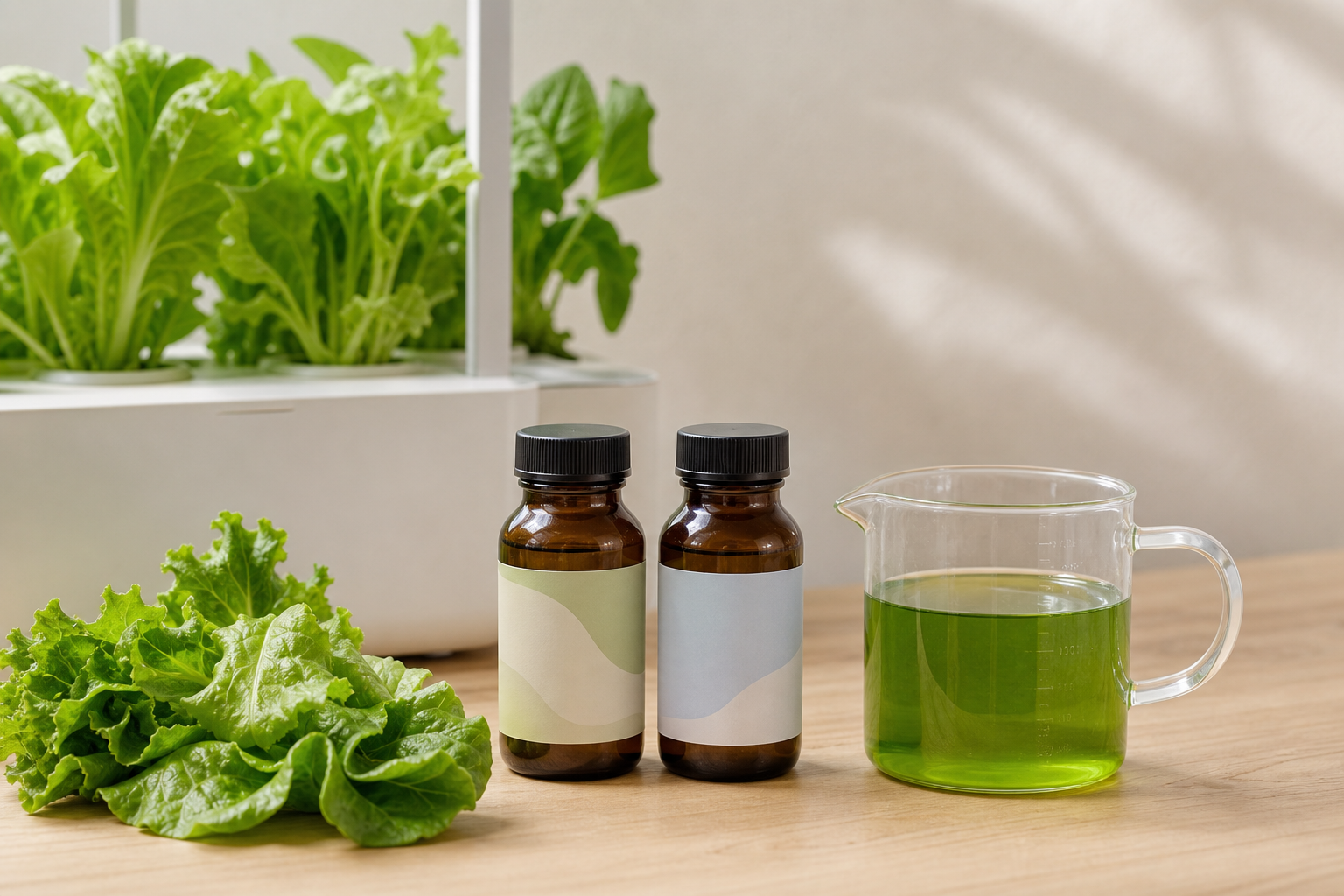
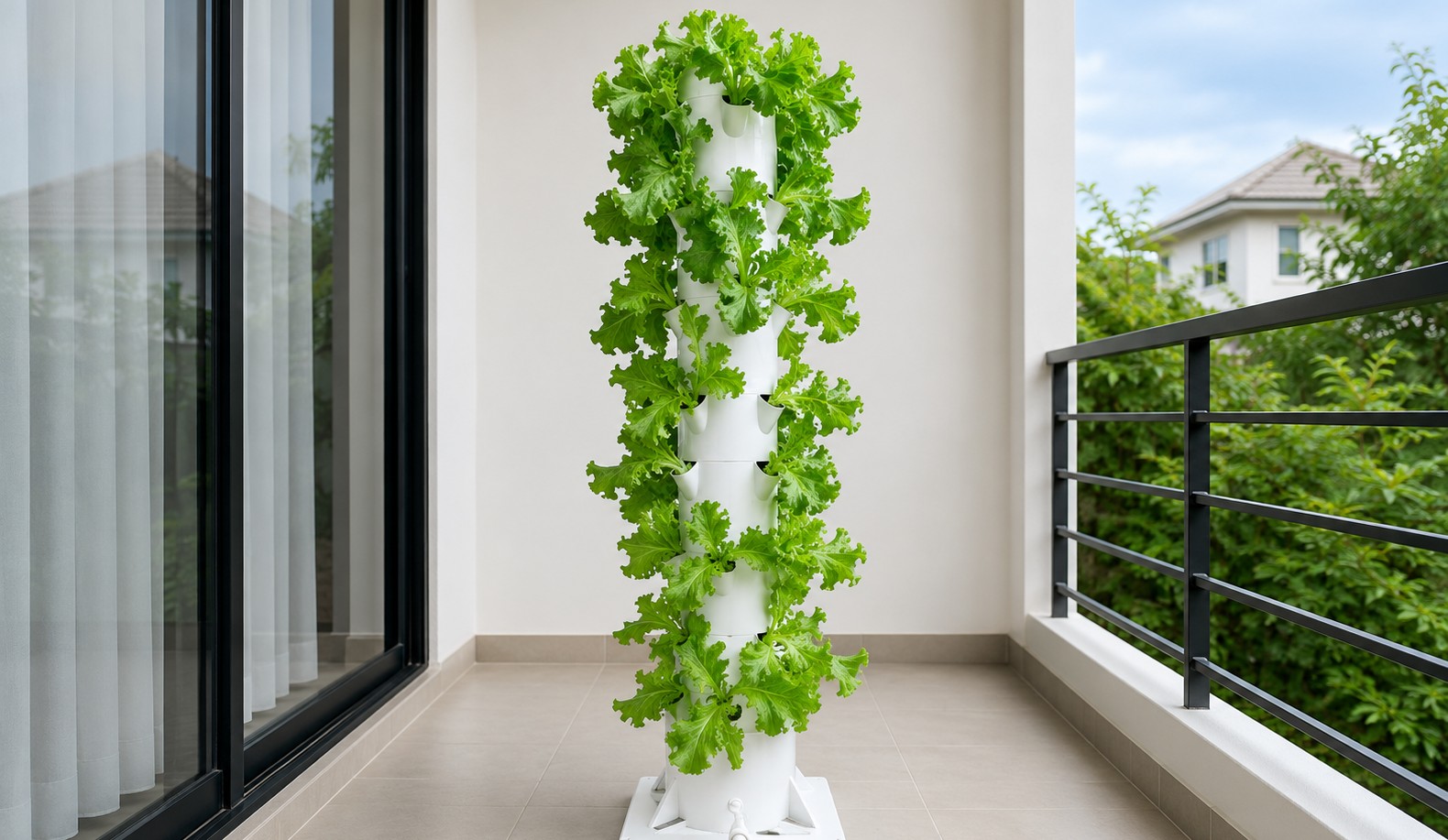
Nutrient balancing is the core skill behind every successful home hydroponic system. Plants cannot access minerals in your reservoir unless pH is in range and EC (nutrient strength) matches the crop stage. Get these two numbers right, and growth becomes predictable; ignore them, and even premium equipment will produce yellow leaves and stalled harvests.
This guide explains how to master hydroponic pH and EC—what they mean, what to aim for, how to test, how to adjust, and how to troubleshoot common drift problems. If you are setting up for the first time, pair this with our beginner hydroponics guide.
Why nutrient balancing matters in hydroponics
In soil, roots buffer against sudden chemical swings. In hydroponics, roots sit directly in water—so pH and dissolved salts change faster and hit plants harder.
- pH controls which nutrients are chemically available for uptake
- EC (electrical conductivity) measures total dissolved salts—your overall nutrient concentration
- Water temperature and oxygen affect how aggressively roots drink and shift the solution
Balanced nutrients are not about perfection every hour. They are about keeping both values inside a stable window long enough for plants to grow without stress.
pH explained: the gatekeeper of nutrient uptake
pH is a scale from 0 (acidic) to 14 (alkaline). Most home hydroponic crops perform best between 5.5 and 6.5, with leafy greens often happiest near 5.8–6.2.
What happens when pH drifts?
- Too high (alkaline): iron, manganese, and zinc lock out—leaves yellow between veins
- Too low (acidic): calcium and magnesium uptake suffer—tip burn and distorted new growth
- Swings throughout the day: plants never settle, growth slows, roots brown prematurely
Test pH at the same time each day until you understand your reservoir’s natural drift. Morning readings before top-offs give the most consistent baseline.
EC explained: measuring nutrient strength
EC tells you how concentrated your nutrient solution is. Units vary by meter—mS/cm, µS/cm, or ppm (500 or 700 scale). Use the scale printed on your device and the chart on your fertilizer label.
Typical EC targets for home growers (mS/cm)
- Seedlings and young transplants: 0.8–1.2 mS/cm
- Leafy greens (lettuce, kale, herbs): 1.2–1.8 mS/cm
- Fruiting crops (tomato, pepper): 2.0–2.8 mS/cm in vegetative stage; adjust per label in fruiting
Start at the low end of the range and increase only when plants look hungry—dark green, glossy leaves with steady growth. Overfeeding is more common than underfeeding in home systems.
Essential tools for nutrient balancing
You do not need a lab—just reliable meters and a simple log.
- pH pen or meter — calibrate weekly with buffer solutions (pH 4.0 and 7.0)
- EC/TDS meter — rinse probe between readings; store dry per manufacturer instructions
- pH up and pH down — potassium hydroxide and phosphoric acid blends formulated for hydroponics
- Measuring syringes or cups — for precise micro-adjustments
- Notebook or phone log — date, pH, EC, water added, and notes on plant appearance
Browse hydroponic accessories for pumps, tubing, and supporting gear that keeps solution circulating evenly—stagnant zones skew local pH readings.
Step-by-step: balancing a fresh reservoir
- Fill with clean water — filtered or tap; note baseline pH before adding nutrients
- Add nutrients at half label rate for the first fill if you are unsure of your water chemistry
- Circulate 15–30 minutes — salts and pH need time to equalize
- Measure EC — adjust upward slowly with more concentrate if below target
- Measure pH — adjust with small doses of pH down or pH up
- Circulate again, then re-test — never chase a number from a single splash of adjuster
- Log the final values — include water volume for future reference
Rule of thumb: change one variable at a time. If EC is low and pH is high, fix EC first, circulate, then address pH.
Daily and weekly nutrient routines
Daily (2–5 minutes)
- Check reservoir level—top off with plain water, not full-strength nutrients
- Glance at plant color and new leaf shape
- Record pH/EC if you are still learning your system’s drift pattern
Every 2–3 days
- Full pH and EC test after circulation
- Small corrections only—0.1–0.2 pH moves, incremental EC bumps
Weekly
- Calibrate meters against fresh buffer solution
- Partial or full reservoir change (see below)
- Inspect roots for sliminess, odor, or browning
Consistency beats heroics. Growers who log for two weeks usually spot their drift pattern and cut daily testing in half.
When and how to change your nutrient solution
Even with top-offs, salts accumulate and ratios shift. Plan a full reservoir refresh every 1–2 weeks for most home systems, or sooner if:
- EC rises while you only add plain water
- pH becomes hard to stabilize
- Water turns cloudy or smells stale
- Algae appears on surfaces or roots
Drain, rinse the reservoir (no soap residue), remix at target EC, adjust pH, and return plants only when readings hold steady for 30 minutes of circulation.
Automated dosing: when it helps—and what it cannot replace
Automated nutrient and pH dosers—like the StackHydro system covered in our automated doser calibration guide—reduce daily variance and alert you to out-of-range readings. They excel when:
- Reservoir volume is large relative to plant count
- You travel or cannot test at the same time daily
- Crop value justifies tighter control
Dosers still need weekly handheld verification. Probe fouling, empty bottles, and pump drift all happen silently. Treat automation as a steady hand, not a substitute for eyes on the plants.
Troubleshooting common nutrient problems
Yellow leaves between veins (interveinal chlorosis)
Often iron lockout from high pH. Lower pH gradually into the 5.8–6.0 band and confirm EC is not excessive.
Brown leaf tips (tip burn)
Usually salt stress—EC too high or insufficient plain-water top-offs. Flush with lower-EC solution and resume feeding conservatively.
pH climbs every day
Common when plants uptake more nitrates and release hydroxide ions. Smaller reservoirs swing faster; increase top-off discipline or shorten change intervals.
pH drops every day
Can indicate organic contamination, root issues, or acidic source water. Check root health, clean the reservoir, and test tap water alone before mixing.
EC keeps rising though you only add water
Plants are transpiring faster than they uptake salts—normal in hot, dry rooms. Stay on schedule with full changes; do not chase rising EC with more concentrate.
Crop-specific nutrient tips
- Lettuce and salad greens — keep EC moderate; high salts produce bitter leaves. See best vegetables for vertical farming for crop pairing ideas.
- Basil and herbs — stable pH matters more than pushing EC; harvest regularly to keep demand steady
- Tomatoes and peppers — raise EC gradually through fruiting; calcium-related tip burn often traces to rapid EC spikes, not true deficiency
When harvest timing matters, nutrient stability through ripening affects flavor—our harvest timing guide covers what to watch for on the plant, not just in the reservoir.
Frequently asked questions
What is the ideal pH for hydroponic lettuce?
Aim for 5.8–6.2. Lettuce tolerates a slightly wider band than fruiting crops, but staying under 6.5 prevents iron lockout that shows as pale, yellowing young leaves.
Can I use aquarium pH test strips?
Strips are better than guessing but far less precise than a calibrated pen. For hydroponics, invest in a meter—you will pay for it in avoided crop losses within one grow cycle.
Should I adjust pH before or after adding nutrients?
Always after nutrients are mixed and circulated. Concentrates shift pH significantly; pre-adjusting plain water wastes time and creates false readings.
How do I lower EC without draining the whole tank?
Remove a portion of the solution and replace with plain water, circulate, and retest. Full drains are still needed on schedule to reset nutrient ratios.
Is tap water okay for hydroponics?
Often yes—test baseline pH and EC first. Hard water may need dilution or filtration; very soft water may need calcium/magnesium supplementation per your nutrient brand’s guidance.
Build the habit, then refine
Mastering nutrient balancing is less about memorizing chemistry and more about building a repeatable loop: measure, adjust in small steps, log, and watch the plants. Once pH and EC stay inside your target window for a full grow cycle, you can focus on light, airflow, and harvest timing—the fun parts.
New to the full workflow? Start with how to start hydroponics at home, then return here each time you mix a fresh batch.